
How to gear up for winter riding?
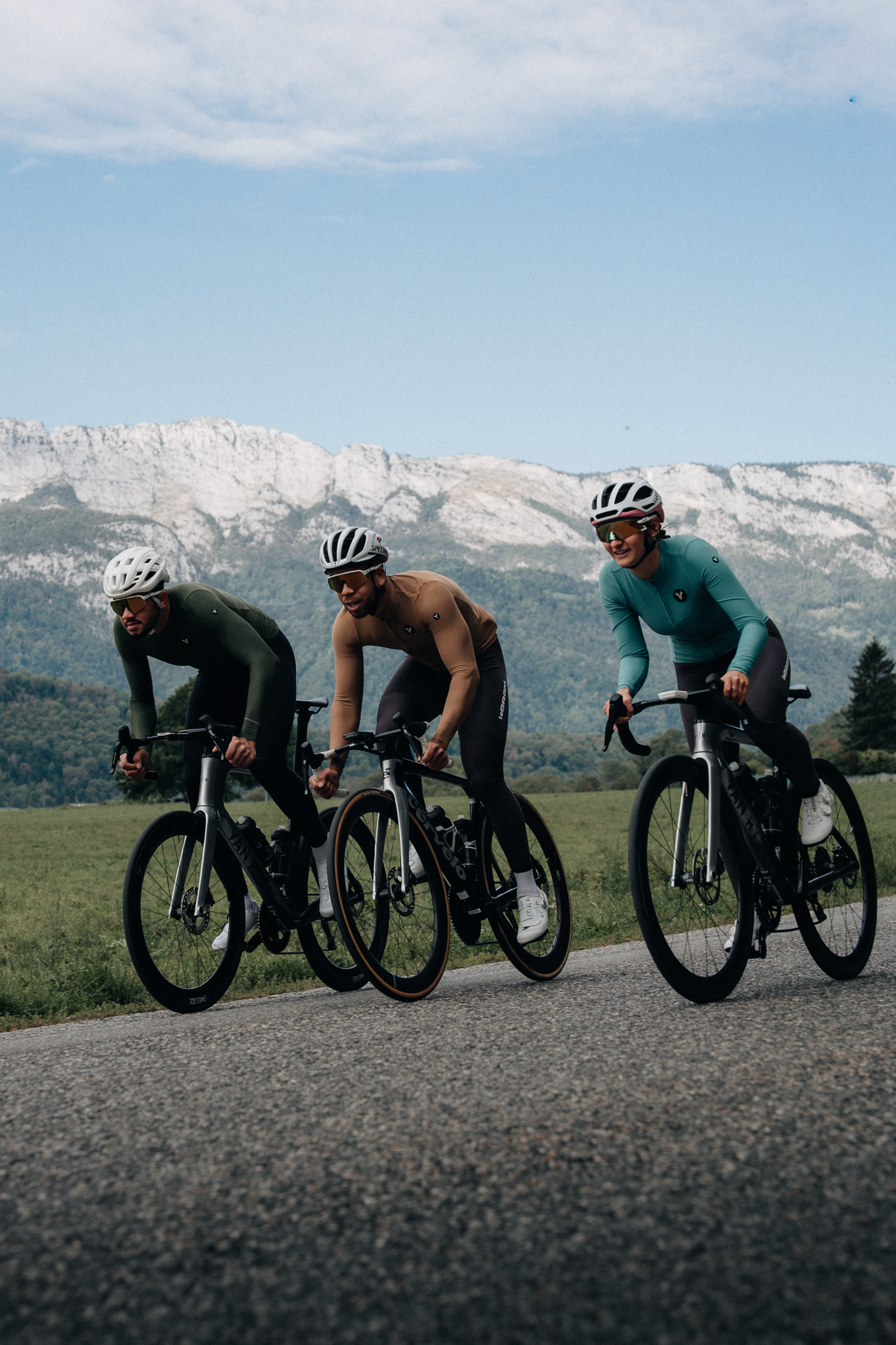
A jacket for every kind of weather
The centrepiece of your winter outfit. Choose it according to the conditions you meet most often.
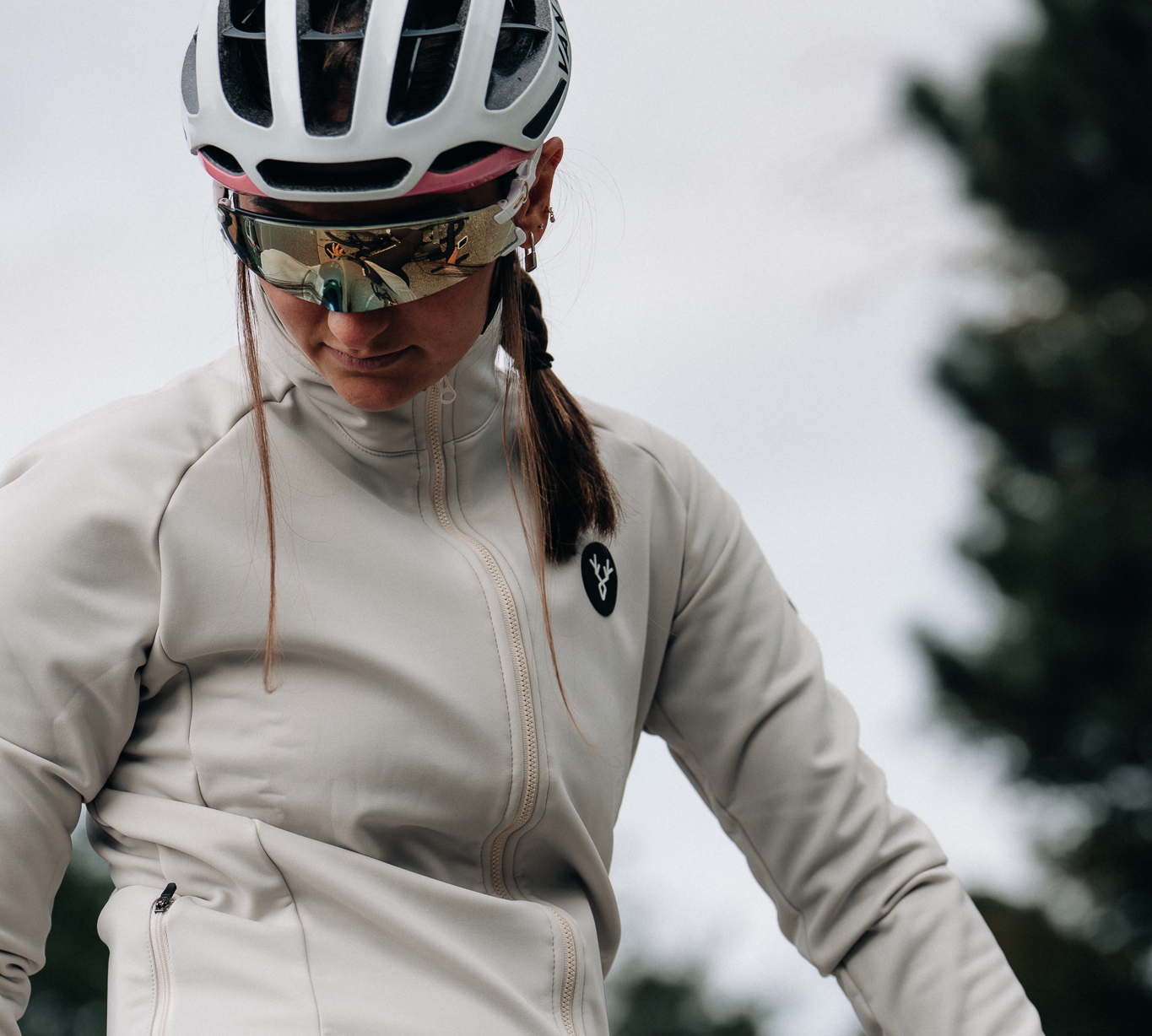
Warmth,
without the sauna
Thermal lining and windproof protection: the heat stays in, even when the temperature drops.
See thermal jackets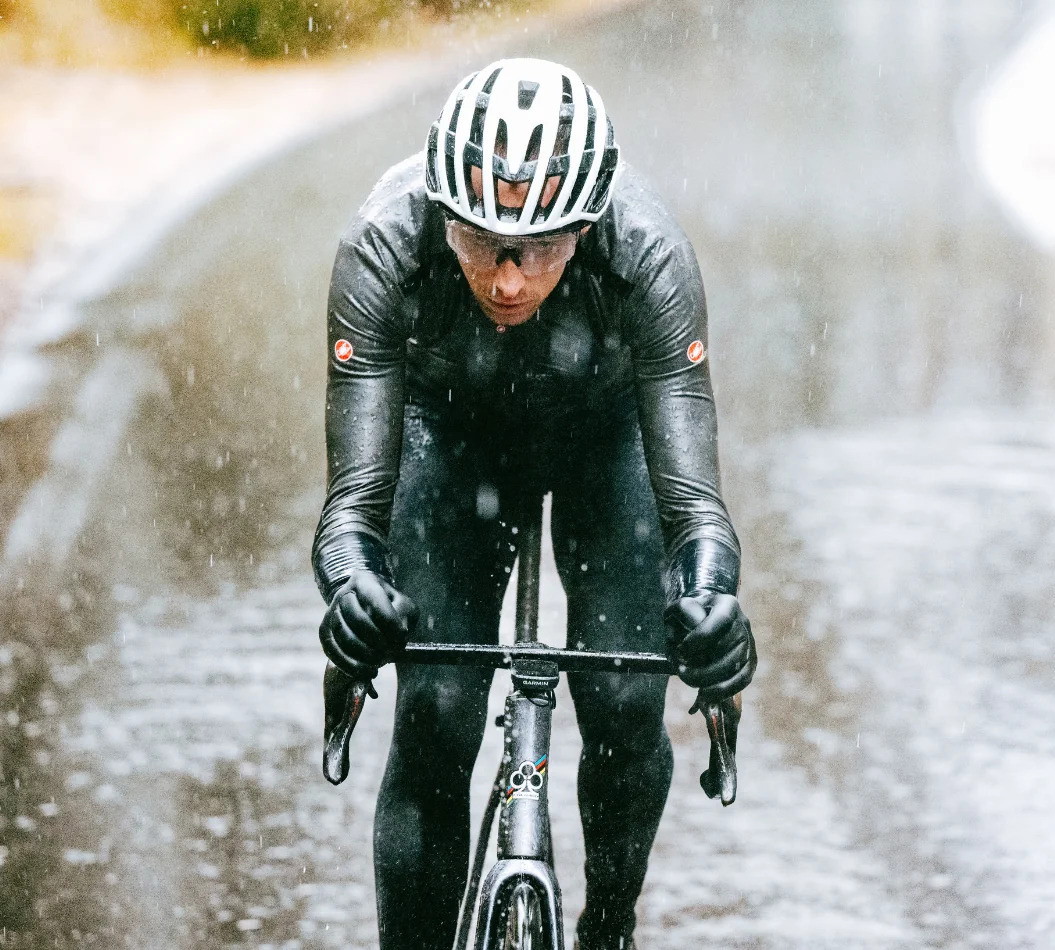
Dry,
whatever the weather
Waterproof and breathable, they protect you from showers without making you sweat on the climbs.
See waterproof jacketsDiscover our bestsellers
Castelli Gabba Pro Long Sleeve Jacket Black Men's
LeBram Training Thermal Jacket Khaki Green
Endura AllTrack Race Cape Waterproof Jacket Purple Women's
Fox Ranger Fire Pewter Grey Men's Jacket
Castelli Perfetto 4 Black Men's Jacket
Castelli Entrata 2 White Women's Long Sleeve Jacket
Maap Flow Insulated White Jacket
LeBram Training Beige Women's Thermal Jacket
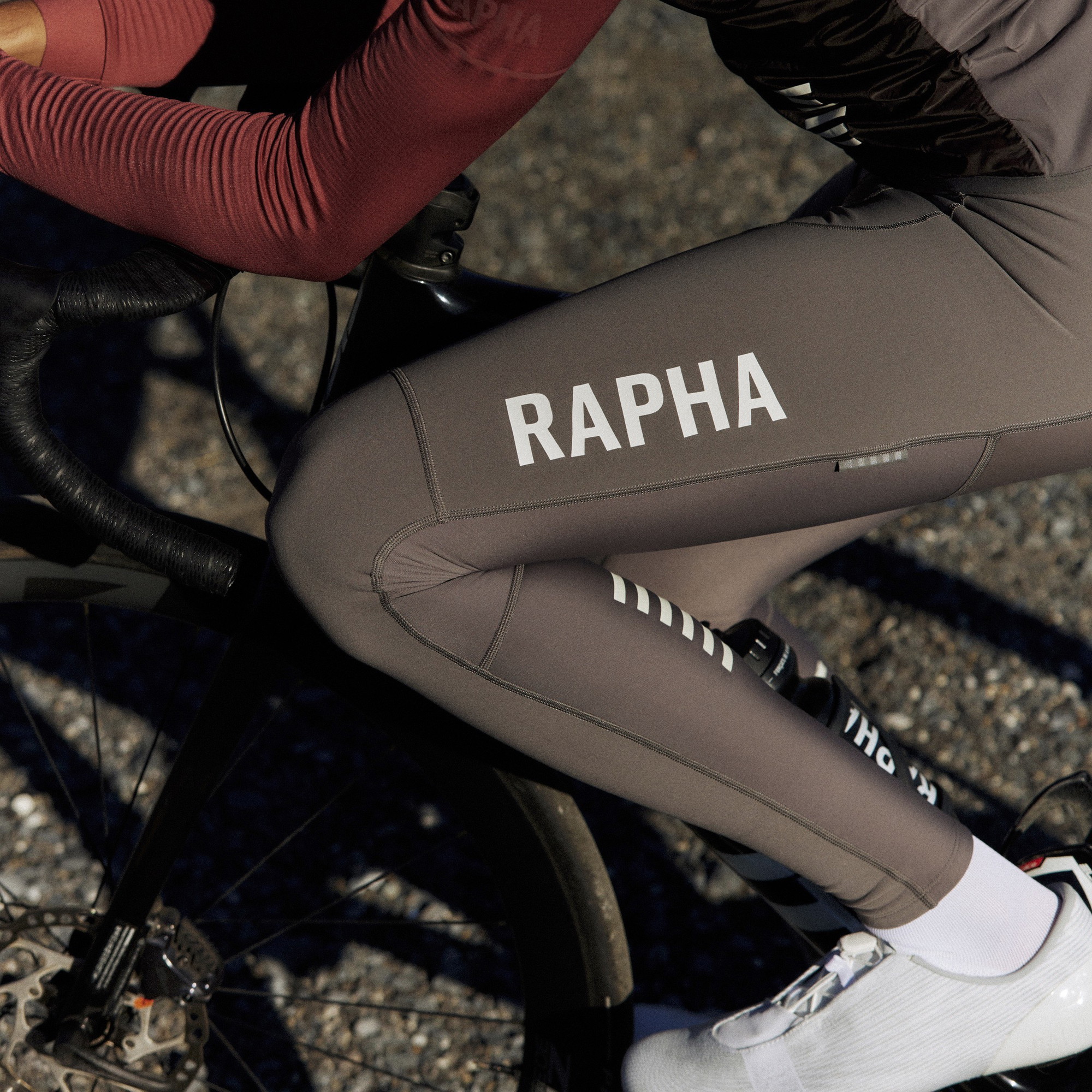
Keep your legs warm, mile after mile
Knees and muscles protected from the cold, a chamois pad suited to long rides: the right tights change everything.
Discover our bestsellers
LeBram Race Water-Repellent Long Tights Black
Castelli Espresso Trnstn Long Tights Black Men's
Castelli Espresso 2 Long Tights Black Men's
LeBram Race Long Tights Black Women's
Rapha Pro Team Lightweight Cargo Long Tights Grey Men's
Assos Uma GT Spring Fall S11 Long Bib Tights Black Women's
Maap Team Evo Thermal Cargo Long Tights Grey
Spiuk A/B Anatomic Long Tights Black Men's
Must-have accessories
Your extremities are the first to get cold. These four pieces make the difference between a ride you endure and a ride you enjoy.
Shoes built for winter
High-cut, insulated and waterproof, they protect your feet where a shoe cover is no longer enough.
.jpg)
Think about your safety in winter
Days are getting shorter and visibility is dropping: seeing and being seen becomes the priority whenever you head out.
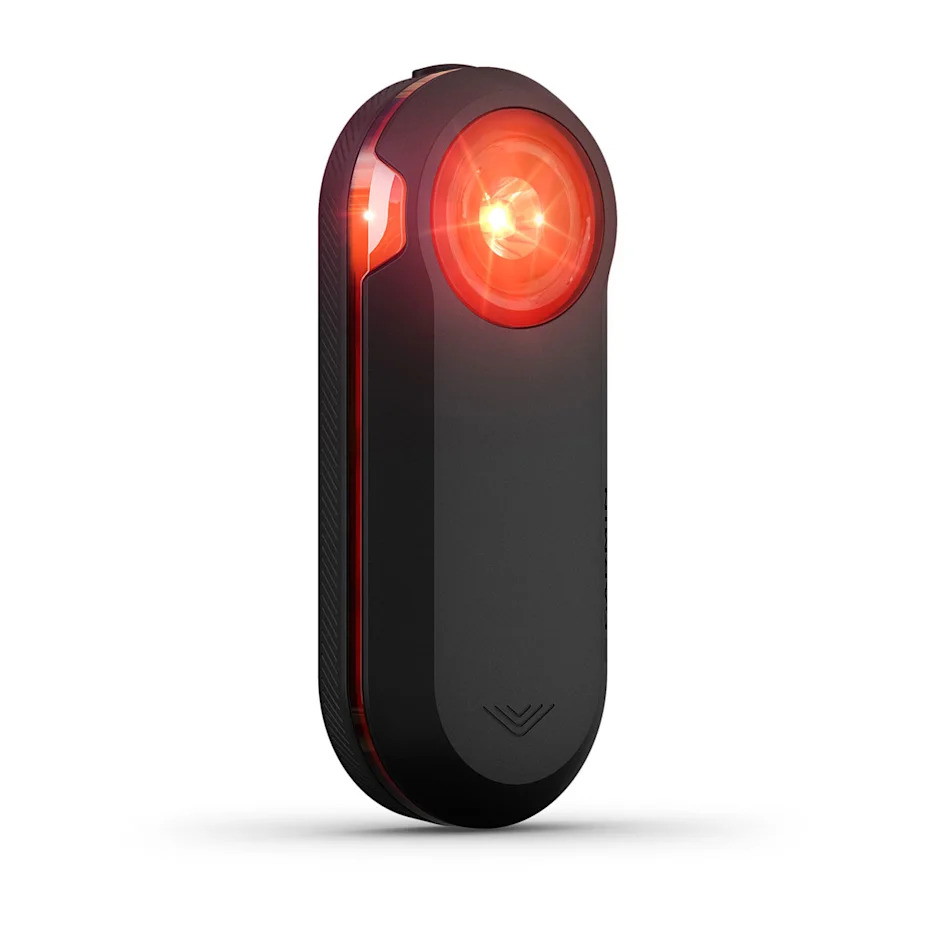
Garmin
Varia RTL 515 radar and rear light
It alerts you to vehicles approaching from behind and makes you visible from afar, day and night. Compatible with Garmin Edge and Wahoo bike computers.
When the weather says no, ride at home
Pouring rain, ice or pitch-dark nights: a home trainer lets you stay fit all winter and arrive ready for spring.
.jpg)
Our home trainers of the moment
Tacx Nēra Home Trainer with 11-Speed Cassette
Van Rysel D500 Smart Home Trainer with Zwift Cog and Click Black
Van Rysel D100 Smart Home Trainer Zwift Edition Black
Tacx NEO 2T Smart Home Trainer
Elite Justo 2 Home Trainer with Zwift Cog and Click
Van Rysel RCR Smart Home Trainer with Zwift Cog and Click
Our men's & women's selection
All our advice for winter riding
Buying guides and tips from our experts to help you choose the right gear.
How to choose your home trainer?
Find the ideal model for your goals and budget. Ride at home all year round and keep your fitness up without any weather constraints.
Read the articleChoosing the right cycling jacket: MTB, road, gravel or urban
Take on the cold and rain without overheating. Windproofing, waterproofing and breathability: select the perfect thermal protection for the way you ride.
Read the articleHow to choose your bike lights?
Be seen day and night. Lumen output, battery life and mounting: equip yourself with the best lights to ride safely on the road.
Read the articleComparison of the best home trainers of 2026
A selection of the year's best-performing models. Reliability, quietness and data accuracy: make an informed choice to progress this winter.
Read the articleHow to choose your MTB tyres for winter riding?
Grip, pronounced knobs and puncture resistance. Keep flawless traction and ride with confidence on muddy or slippery trails.
Read the articleHow to choose your road bike tyres for winter?
Puncture-protection layers and soft compounds for extra grip. Make your rides on wet or cold tarmac safer without sacrificing efficiency.
Read the articleIn cycling, bad weather is rarely unavoidable; it is almost always a question of poorly calibrated gear. Understanding how your thermal kit works completely changes your relationship with winter.
The three-layer rule: why piling on old jerseys doesn't work
The most common mistake, the one every cyclist has made when starting out, is to stack up layers thinking that bulk will keep you warm. You set off overdressed, attack the first climb, sweat heavily, and the moisture stays trapped against your skin. As soon as the road rises, or you tip into a descent with a 40 km/h headwind, that sweat cools instantly: this is the "fridge" effect.
To stay warm on a bike, you first need to know how to stay dry. That is the whole principle of the three-layer system, which separates sweat management, heat retention and protection from the elements:
- The first layer (the technical base layer): This is the most underrated piece of the cyclist's wardrobe, yet the most decisive. Worn directly against the skin, like a fitted second skin, it is not just there to insulate but above all to wick perspiration outwards. Choose technical base layers made of hydrophobic synthetic fibres (polypropylene, polyester) for fast-paced rides where you will sweat a lot, or merino wool, formidable in severe cold for its natural ability to keep the body warm even when damp, without ever holding on to odours.
- The second layer (the thermal insulator): Its role is to trap the warm air produced by your body during effort. It is generally a long-sleeved jersey in brushed fabric. In mid-season or during a mild winter, this middle layer can be enough under a simple windproof gilet. In the heart of January, it slips in between your base layer and your jacket.
- The third layer (the outer protection): This is your armour against wind, freezing fog and showers. A good winter thermal jacket now combines the roles of layers 2 and 3 in a single technical piece. The benchmark models — such as the Gabba or Perfetto ranges from Castelli — have revolutionised the way people ride: instead of shutting you inside a waterproof plastic sauna, they use windproof and water-repellent membranes (Gore-Tex Infinium, Polartec) placed strategically on the chest and shoulders, while leaving more breathable panels on the back to release excess heat on the bumps.
A tip from the field: when you step out of your home and climb on your bike, you should feel slightly cool for the first five to ten minutes. If you already feel warm in your living room or on the first pedal stroke, you are overdressed.
Road, MTB, gravel: each discipline has its own way of managing the cold
You don't dress the same way to ride three hours at a steady pace on the flat in a bunch as you do to link technical singletracks in the woods. The key factor is windchill (the perceived cold linked to your speed) and the heart-rate intensity of your ride.
On the road, average speed is high and the coasting phases on descents are formidable. At 35 km/h in 5°C, the felt temperature quickly drops to around zero. The aerodynamics of your kit matter as much as its protection: a close fit avoids flapping fabric that lets icy air rush in and slows you down. This is where the combination of long thermal bib tights (which come up well over the lower back and stomach) and a fitted windproof jacket makes perfect sense. Also think about models with a water-repellent treatment (such as Nano Flex or DWR): even if it isn't raining, spray from the front wheel or from your mate's wheel right ahead always ends up soaking your lower back and shins.
In MTB, speed is lower, the forest blocks much of the wind and riding engages the whole upper body. You therefore get much warmer, but you are exposed to mud splashes, frozen puddles and brambles. Favour sturdier, abrasion-resistant fabrics, such as trail/all-mountain softshell jackets, paired with water-repellent trousers or long tights worn under shorts to protect your chamois pad from splashes of dirt.
Gravel sits exactly on the border between the two worlds. You alternate fast sections on small wind-exposed roads with slow, sustained passages along sunken lanes. The watchword in winter gravel is modularity: being able to open the collar, pull down a neck warmer, or slip a thin packable jacket (such as a windbreaker or a light insulated vest) into the cargo pockets of your tights when the temperature rises in the middle of the day.
Protecting your joints and saving your extremities
In winter, the human body follows a simple survival logic: as soon as core temperature threatens to drop, it reduces blood flow to the extremities (fingers, toes, ears) to concentrate warm blood around the vital organs. That is why you can have a sweaty torso while your toes are completely numbed by the cold.
For the legs, the need goes beyond simple comfort: it is joint-related and muscular. The patellar tendons are poorly vascularised and directly exposed to the relative wind. Riding with bare knees below 12-13°C is the shortest path to tendinitis. While leg warmers and 3/4 tights are perfect for cool autumn and spring mornings when the sun eventually breaks through, long bib tights become essential as soon as the thermometer drops below 8-10°C.
For hands and feet, it all comes down to the details:
- Hands: A pair of winter gloves must strike a subtle compromise between thermal insulation and dexterity. If the glove is too thick, like a ski glove, you lose feel when braking — particularly dangerous on wet roads or on a committed MTB descent — and you struggle to change gears. Choose pre-shaped gloves with a windproof membrane on the back and silicone pads on the palm for grip.
- Feet: This is the Achilles heel of 90% of cyclists in winter. Your summer shoes were designed with perforated soles and mesh fabrics to ventilate the foot in 30°C heat. In winter, these are real entry points for icy air. Golden rule number one: don't tighten your dials or straps too much, and never stack two pairs of socks in a narrow shoe. By compressing the foot, you cut off blood circulation and the cold sets in within twenty minutes. Combine a good pair of merino winter socks with neoprene shoe covers for the road. And if you ride all winter in rain or mud, investing in a real pair of high-cut, waterproof winter MTB or road shoes (often fitted with a Gore-Tex membrane) will literally change your life: no more struggling to pull on overshoes, no water creeping in through the SPD or Look cleats, and an ankle kept perfectly warm.
- Head and neck: Nearly 30% of body heat loss occurs through the skull and the back of the neck. A thin skullcap that covers the ears without interfering with the arms of your glasses, combined with a neck warmer that stops cold air from rushing in through the collar of your jacket, is often enough to gain several degrees of perceived comfort.
Visibility and safety: seeing and above all being seen from every angle
In November, December and January, light fades from 4:30 pm. But the danger is not limited to the dead of night: it is grey days, low-lying fog, drizzle and the very low sun on the horizon blinding drivers that represent the greatest risk on the road.
For a long time, cycling fashion dictated all-black. While black tights remain unbeatable (notably because they show dirt less from road spray), incorporating bold touches of colour on the upper body or retro-reflective inserts on moving areas (ankles, calves, wrists) lets drivers identify you immediately as a cyclist.
On the electronics side, bike lighting is no longer reserved for night rides: the Daytime Running Light (riding with a powerful daytime flash) has become a safety standard on the road as well as on gravel. At the rear, the arrival of radars — like the essential Garmin Varia — has changed the game for everyone who trains alone in winter. As well as adapting the intensity of its flash when a car approaches from more than a kilometre away, it shows on your bike computer the number and speed of vehicles behind you, even when the noise of the wind in your ears or your skullcap stops you from hearing them coming.
The home trainer option: saving your week when the weather becomes impossible
Being a passionate cyclist doesn't mean playing the fool on black ice or in 80 km/h gusts. There are weeknights when darkness fell two hours ago, freezing rain is coming down horizontally, and going outside is more of a punishment than a pleasure.
That is where the home trainer takes over. Long seen as a monotonous chore facing the garage wall, indoor training has been transformed by the arrival of ultra-quiet direct drive home trainers and connected platforms. In 45 to 60 minutes of structured session at home — no traffic lights, no time wasted pulling on and then washing a muddy kit — you do remarkably effective quality work (MAP, cadence, strength). It is the ideal complement to weekend outdoor rides to keep your pedal stroke sharp all winter and arrive in March with your fitness already honed.
Maintaining your technical clothing to preserve its properties
One last point that is often forgotten once the ride is over: technical winter clothing needs a minimum of care to last several seasons. Windproof membranes and water-repellent treatments hate two things: excessive heat and fabric softener.
After your winter rides, wash your jackets, tights and base layers at 30°C maximum, on a delicate or sports programme, with a neutral liquid detergent. Ban fabric softener entirely, as its chemical agents clog the micropores of breathable membranes and destroy elastane fibres (the Lycra in your tights). Leave to air-dry, away from a radiator. And if, after around twenty washes, you notice that water no longer beads on the surface of your jacket or water-repellent tights, a simple textile reproofing spray will be enough to reactivate the hydrophobic barrier as good as new.
All that's left is to check your tyre pressure, charge your lights and choose your route: properly equipped, winter is often the season you come out of with the best cycling memories.
We will contact you by e-mail when this item is back in stock.


