
How do you choose your bike trailer?
Bike Trailer: Transporting Loads Safely
For several years, cycling has been developing rapidly. As a sport, but especially as a full-fledged means of transportation. For work, to take children to school, to travel, to go shopping, etc. In all these cases, a load constraint may lead the cyclist to reconsider the use of the bicycle.
To address this, bike trailers are highly recommended. Depending on the need, different types of trailers are available, allowing everyone to find a trailer for their bike. They offer a practical alternative for cyclists wishing to increase their transport capacity without compromising the maneuverability of their bike.
All bike trailersWhat are the essential criteria for choosing the right bike trailer?
Intended Use
The choice of a bike trailer depends on its main use. For transporting children, safety and comfort are priorities. For luggage or goods, load capacity and stability are paramount. Models for animals must offer ventilation and safety. Clearly defining your needs allows you to choose an appropriate model. For more information, see the section below.
Load Capacity
Each trailer has a maximum load capacity and dimensions that must be adapted to your use:
- For a child: pay attention to the maximum weight (often around 22 to 45 kg depending on the models) and the interior size.
- For an animal: check the allowed weight, but also the floor space.
- For equipment: consider the usable volume in liters or liters + max weight (sometimes > 50 kg for cargo trailers).
⚠️ Tip: never overload a trailer beyond the manufacturer's specifications — this affects stability and safety.
The Hitch System
Compatibility with your bike is essential:
- Attachment to the rear wheel axle: the most common, often via a through axle or a quick attachment.
- Attachment to the seat post or frame: rarer, sometimes used for atypical bikes.
- E-bike compatibility: pay attention to the type of axle, rear motor, or disc brakes.
Good to know: some manufacturers offer adapters to fit the standards of your bike.
Safety
Especially for transporting children, but also animals, safety is a central point:
- 3 or 5-point harness for children
- Reinforced frame with rigid hoops
- Visibility: flag, reflectors, catadioptric reflectors, integrated or optional lighting
- EN 15918 standard: it ensures that the trailer meets European safety requirements
Comfort
A child or an animal may potentially spend several hours in the trailer.
- Suspension: very useful on rough terrain
- Padded seat, adjustable backrest, headrest
- Ventilation and protection: mosquito net, sunshade, rain cover
- Interior space: so that the child or animal can move or sleep
Ease of Use
If you lack space at home or need to transport it regularly:
- Prefer a foldable trailer, with wheels that can be removed without tools
- Check the folded/unfolded dimensions for storage in a car, train, basement, etc.
- See if the folding is quick or requires several manipulations
The Different Uses of a Bike Trailer
Bike Trailers for Children
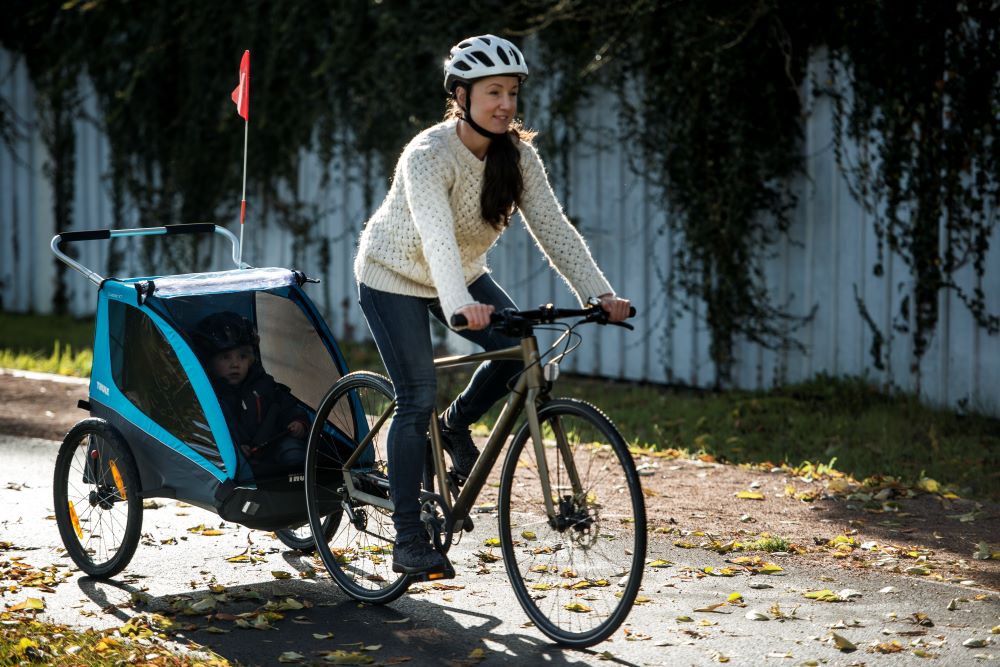
Trailers specially designed for children offer a safe and comfortable way to take them for a ride or to school. They are equipped with safety harnesses and protection against the elements.
Utility or Cargo Bike Trailers
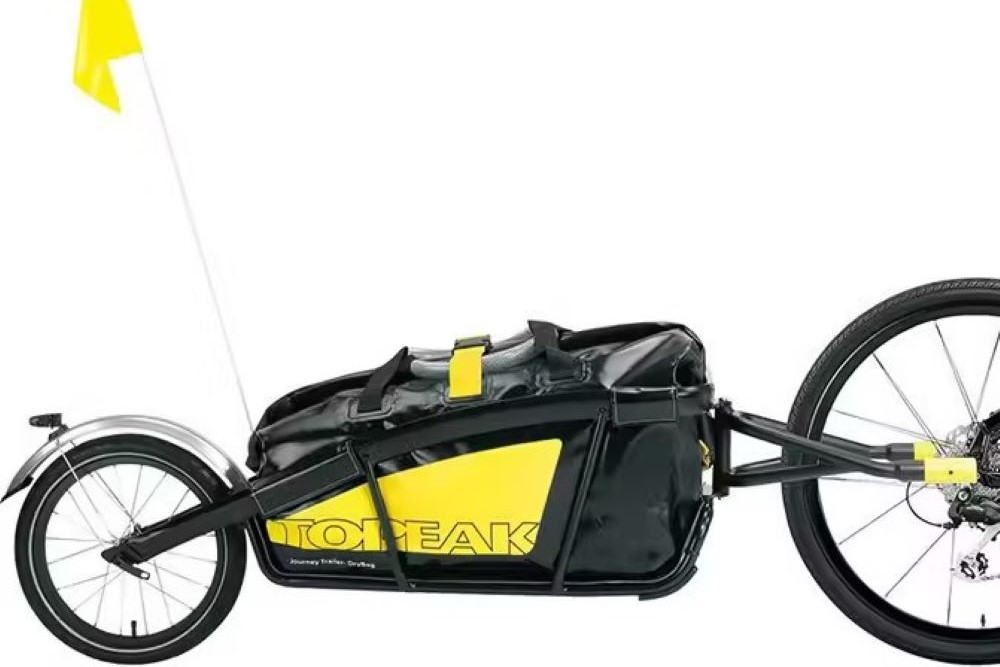
Perfect for transporting equipment, groceries, or camping gear, cargo trailers come in open platforms, rigid boxes, or waterproof bags. They are often more robust, with a higher load capacity.
Bike Trailers for Animals
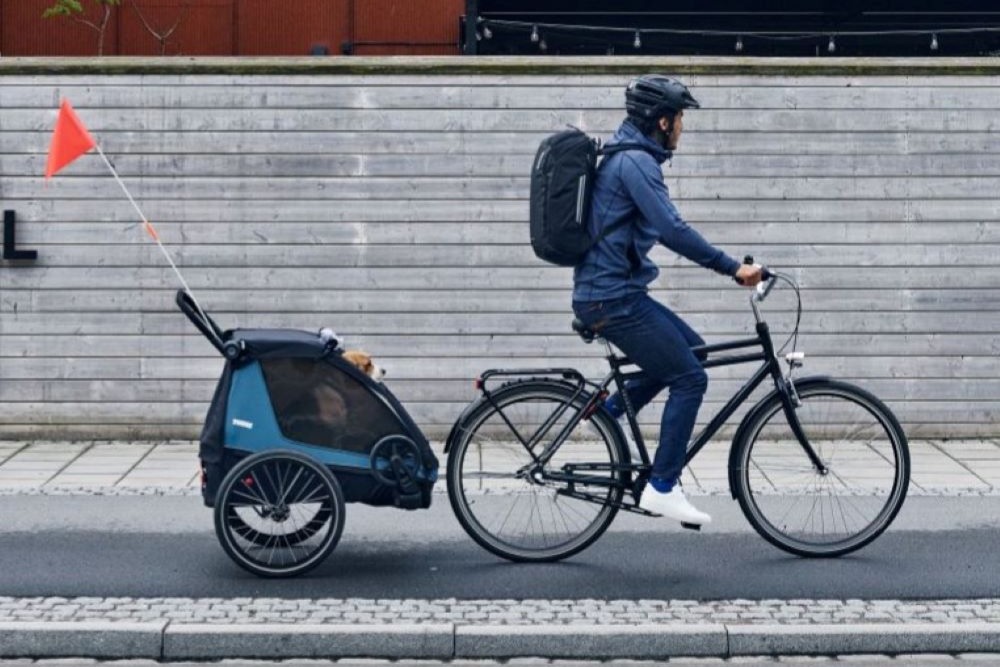
For pet owners, some trailers are designed to safely transport dogs or other animals, offering ventilation and comfort during the journey.
Modular and Multifunctional Trailers
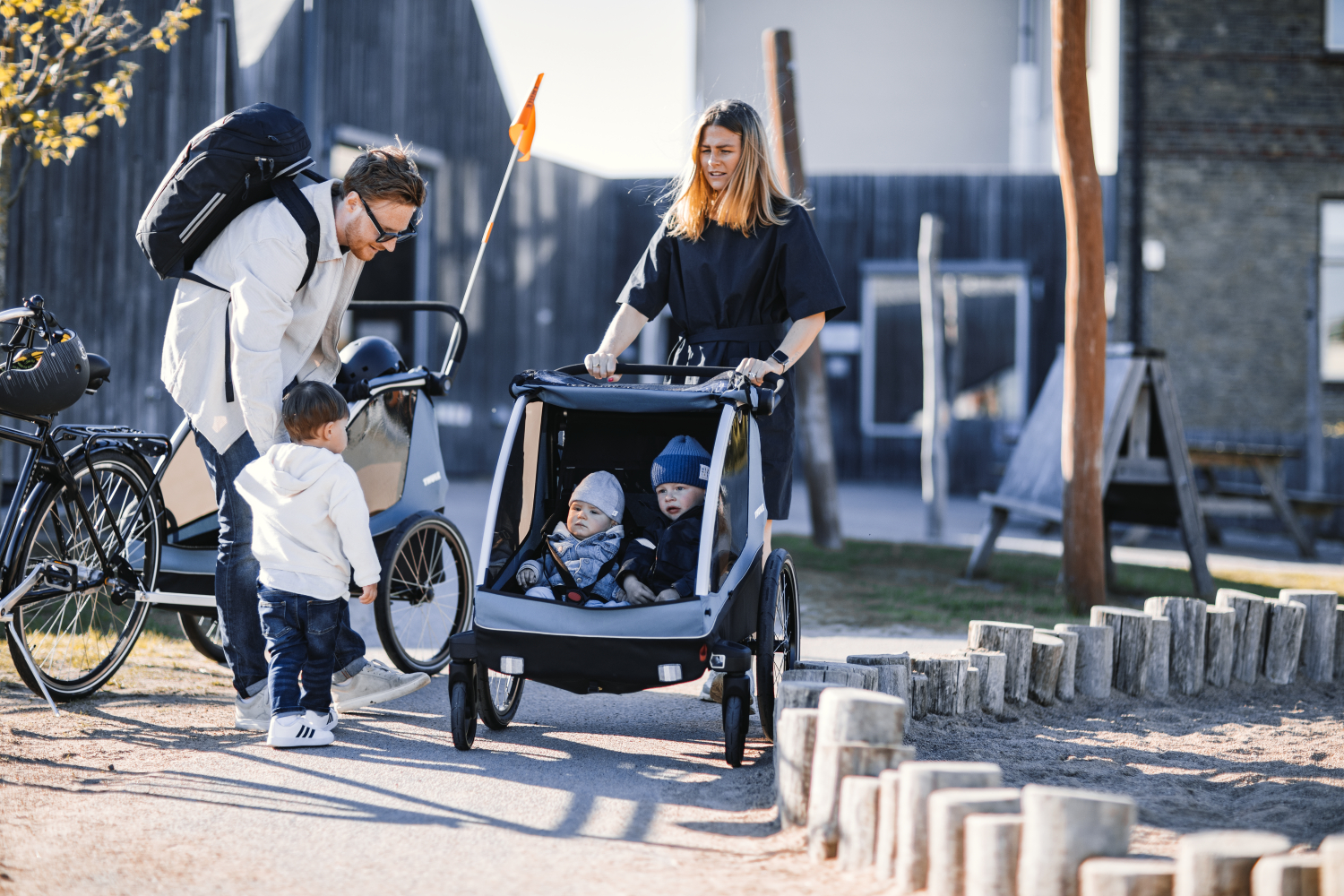
Some trailer models are transformable according to needs: jogging, skiing, walking, cycling. These 2-in-1 or 3-in-1 models appeal to sporty families or cyclists who want to do everything with a single piece of equipment.
The Importance of Bike Compatibility
Before buying a bike trailer, it is crucial to check its compatibility with your type of bike. Most trailers attach to the rear wheel axle, either by a quick clamp or a through axle. Some models attach to the frame or seat post, but these systems are rarer.
Standard bikes (city, hybrid, mountain) are generally compatible, while e-bikes require special attention: presence of a rear motor, reduced range with load, and need for an adapter. Folding or road bikes pose more constraints: often non-standard attachment, less suitable braking for heavy loads, and limited space.
Bikes with disc brakes or through axles must be checked for compatibility with the trailer's attachment system. It is also important to anticipate changes in the bike's behavior: additional weight, longer braking, and inertia in turns.
Finally, for households with multiple bikes, purchasing a secondary attachment kit can simplify daily use. Thorough verification beforehand avoids mistakes and ensures safe use.
Useful Accessories for Bike Trailers
Accessories can significantly improve the comfort, safety, and versatility of your bike trailer. Among the essentials are rain covers, sunshades, and mosquito nets, which effectively protect children, animals, or transported equipment, regardless of the weather conditions.
Safety Accessories
In terms of safety, adding reflective flags, LED rear lights, or reflective strips increases visibility on the road, especially in urban areas or during night trips. A lock can also secure your trailer when stopped.
Comfort Accessories
For more comfort, there are padded mats, cushions, or even baby hammocks, useful for toddlers. If you are sporty or want versatile use, some models offer conversion kits (jogging, stroller, skiing) to adapt the trailer to other activities.
Hitch Accessories
Adapters ensure compatibility with different types of bikes (e-bikes, through axles, etc.), and spare parts can extend the life of the trailer. These accessories offer a real plus in everyday practicality.
Safety and Maintenance
Maintenance of the Bike Trailer
Regular maintenance of your bike trailer is essential to ensure its longevity and proper functioning. It is recommended to perform a complete inspection every six months and before each long trip. This check includes the condition of the tires, the structure of the frame to detect any corrosion, as well as the proper functioning of signaling devices such as lights and reflectors.
How to Clean Your Bike Trailer?
Cleaning should be done after each use, especially if the trailer has been exposed to mud or moisture. For this, it is advisable to use warm water, mild soap, and a soft brush to remove residues while preserving the materials. Regular lubrication of moving parts, especially the locking system and bearings, helps prevent wear and ensure smooth operation. The use of suitable oils, such as lithium white grease, is recommended to extend the life of the components.
We will contact you by e-mail when this item is back in stock.


