


Preparing your triathlon gear can seem like a huge puzzle, especially if you've never tried the experience before. Indeed, triathlon is a sport consisting of three consecutive events: swimming, cycling, and running. Needless to say, the equipment to bring is quite substantial. Here are some tips and tricks to simplify your start in triathlon!
The basics of the outfit: the case of the trisuit
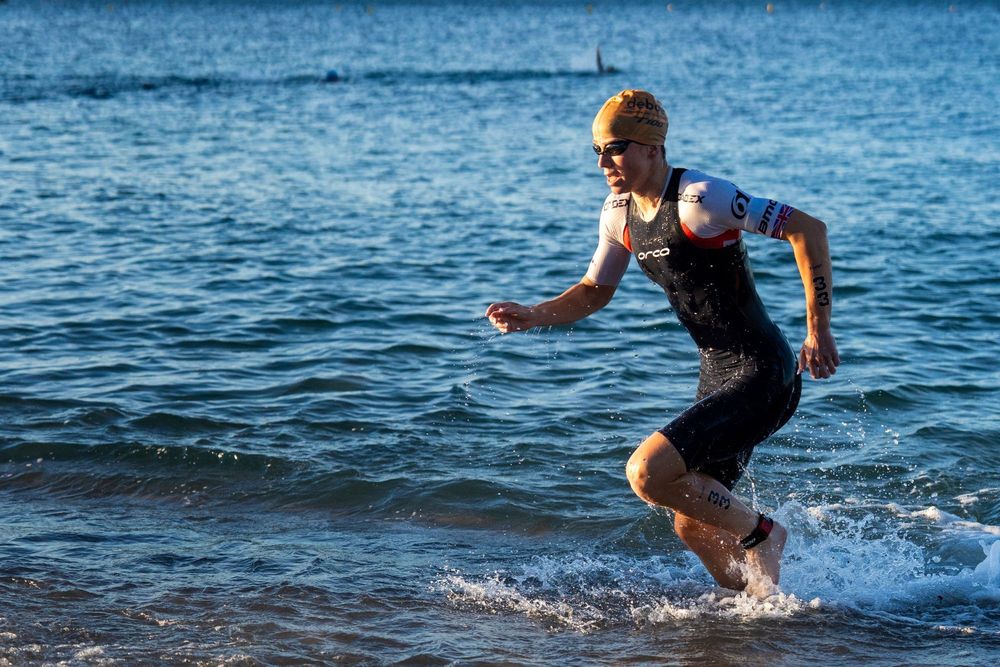
Before even tackling the various events, you will need a trisuit. This suit is a single outfit that allows you to chain the three disciplines with just one attire. Very practical, it saves you from clothing changes during race transitions and helps you save maximum time! It is worn without underwear, except for women who should wear a supportive sports bra.
You can choose between different models: The sleeveless or short-sleeved trisuit is made of stretch fabrics allowing a perfect fit, its chamois pad provides the necessary comfort for cycling, and finally, its material allows easy sweat wicking while offering great freedom of movement for the running event.
However, you can also choose to wear the trisuit in two separate pieces (shorts + jersey/singlet) which offers you several advantages. Indeed, you can put on your singlet after swimming and thus stay dry for the rest of the events, but also easily change tops, go to the toilet more easily, and enjoy a more breathable outfit.
The essential "electronics": Don't forget your GPS heart rate watch. Water resistant, it will allow you to analyze your effort. Finally, the timing chip (provided by the organizers) must be securely fastened, usually to your left ankle (to avoid any rubbing against the bike crankset).
For more information, feel free to check out our guide: How to choose your triathlon suit?
First event: swimming
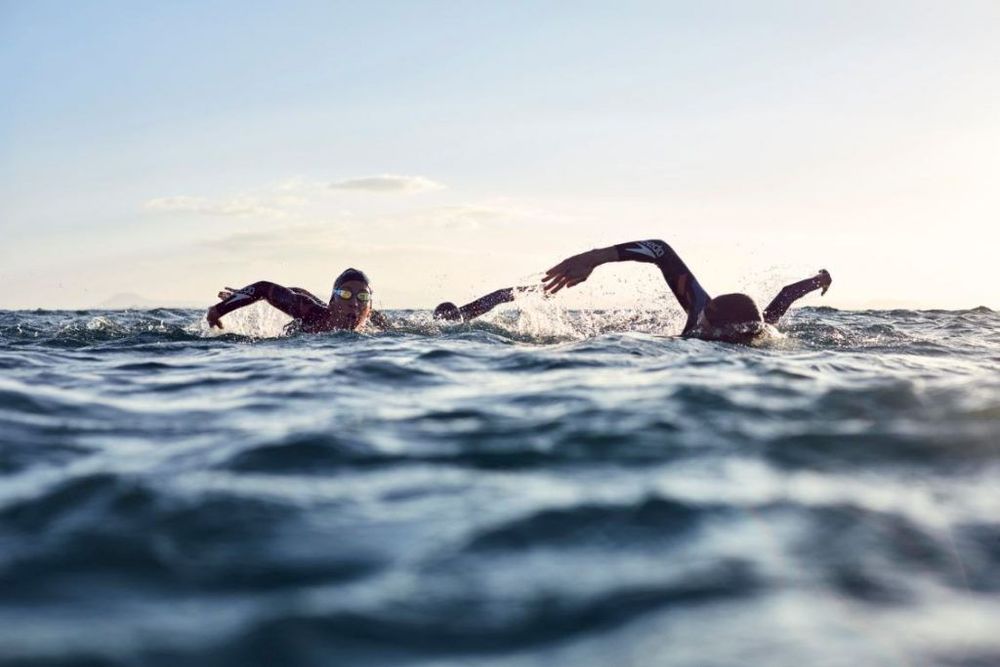
Wearing a neoprene wetsuit improves buoyancy and glide, provides thermal protection, and increases comfort. Its use is mandatory when the water temperature is below 16 degrees but prohibited when the temperature exceeds 24 degrees. Be careful not to confuse the neoprene wetsuit with surfing or diving equipment, which do not have the same qualities.
Additionally, you should wear swimming goggles with a slightly wider field of vision preferably. In case of strong brightness, we recommend taking goggles with UV protection and anti-reflective coating. You will also need a swim cap for training in the pool even if on competition day, the organization provides it with your number written on it. You can optionally add earplugs and a nose clip if you are used to them.
Finally, an anti-chafing cream helps to avoid irritation caused by salt during sea events (to be applied generously on the neck) and a small towel will allow you to dry your feet before putting on your cycling shoes.
Transition 1 (T1): from water to bike
The transition is often called the "fourth discipline." In the transition area, you will have prepared a small box or a mat with your belongings. Putting some talcum powder in your cycling shoes will greatly help you slip your still-wet feet inside.
Second event: cycling
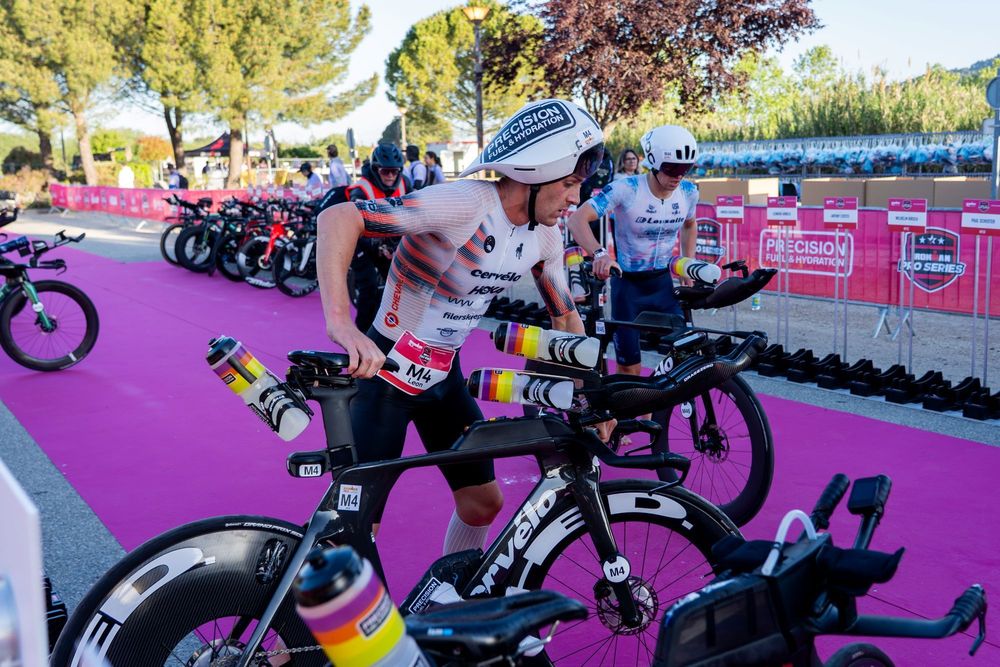
The bike is essential for this event! The important thing so that you don't regret this first experience is to prioritize comfort on the bike and to choose one that fits your size. You don't necessarily need a time-trial bike with a very aero position, take a bike that you like to ride, where you feel comfortable.
Don't forget that wearing an approved helmet is mandatory. It will be checked by referees at the start of your race (the chin strap must actually be fastened before even touching the bike!). You can also use clipless pedals provided you have already ridden with them and trained. To make this event easier, know that there are specific triathlon cycling shoes, featuring a wide opening, a reversed strap, and a heel loop for quick putting on.
Many accessories for this event may also be very useful to you: a saddle bag and/or frame bag (containing the essential repair kit: spare inner tube, tire levers, mini pump or CO2 cartridges), sunscreen, a pair of glasses to protect your eyes from dust, insects, or the sun, and a race number belt with three attachment points to properly position your race number (it must be turned to your back while cycling). Also think about your hydration by attaching one or two bottle cages, and plan your nutrition (gels or energy bars) that you can tape directly onto your frame tube.
You can also get an aero bar and there are two types:
- Short aero bars that can be useful in races where drafting is allowed (usually from XS distance to Olympic distance). However, be careful that the aero bar does not extend beyond the brake hoods as this will be checked by the referees when you drop off your bike in the transition area.
- Long aero bars for races where drafting is prohibited (generally in L, XL and XXL distances). They will allow you to stay in an aerodynamic position for several hours thanks to their comfort.
Finally, take the time to put on a pair of socks to promote your comfort during the event (although pros often skip them on short distances).
Transition 2 (T2): from cycling to running
When you arrive at your bike rack spot, the bike must be hung on the bar before you remove your helmet. It is at this moment that you must turn your race number belt to the front (the number must be visible from the front during the run).
Third event: running
It is very important for this event that you choose running shoes suited to the distance you have to cover but also to your stride. If the triathlon is short, opt for dynamic shoes. On the contrary, if the triathlon is long, choose comfortable shoes with good cushioning.
You can also use self-locking laces (elastic) to avoid losing time with lacing and to prevent your foot, which often swells with effort, from being too compressed.
Don't forget a few essentials: sunscreen and a cap (or visor) if the sun is out. It can also be useful to bring with you a final energy gel or a water flask to meet your needs between two aid stations organized by the event.
The little extra: To carry all this varied equipment on the morning of the race, don't hesitate to equip yourself with a large transition bag with compartments and to prepare a checklist the night before. You will sleep all the more peacefully!

Redac
Author
The Alltricks editorial team: passionate experts sharing blog tests and advice on running (10k to marathon), trail, outdoor activities, and of course, all types of cycling.
View his articles


