


At Altra, the Olympus has always had this somewhat special status: the big shoe in the catalog, the one you take when you know you’re going to be on your feet for hours. This seventh version doesn’t change the formula: a wide fit, a Vibram sole, and the promise to handle technical terrain without ever giving up on protection. Eric, a member of the Alltricks staff, tested it on three outings, about 40 km and 500 m of elevation gain, between forest paths and more technical trails, in dry weather. Here’s how it turned out.
Design
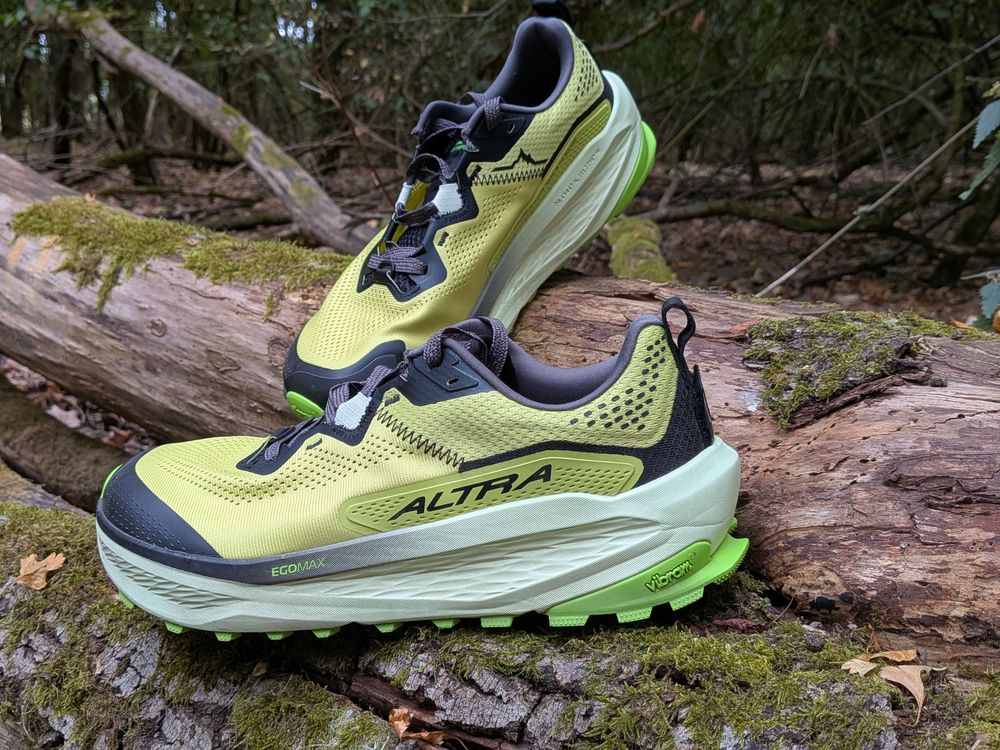
Quite functional design and frankly imposing, the color is still quite pleasant to the eye
First impressions: a massive Olympus 7 that plays the confidence card
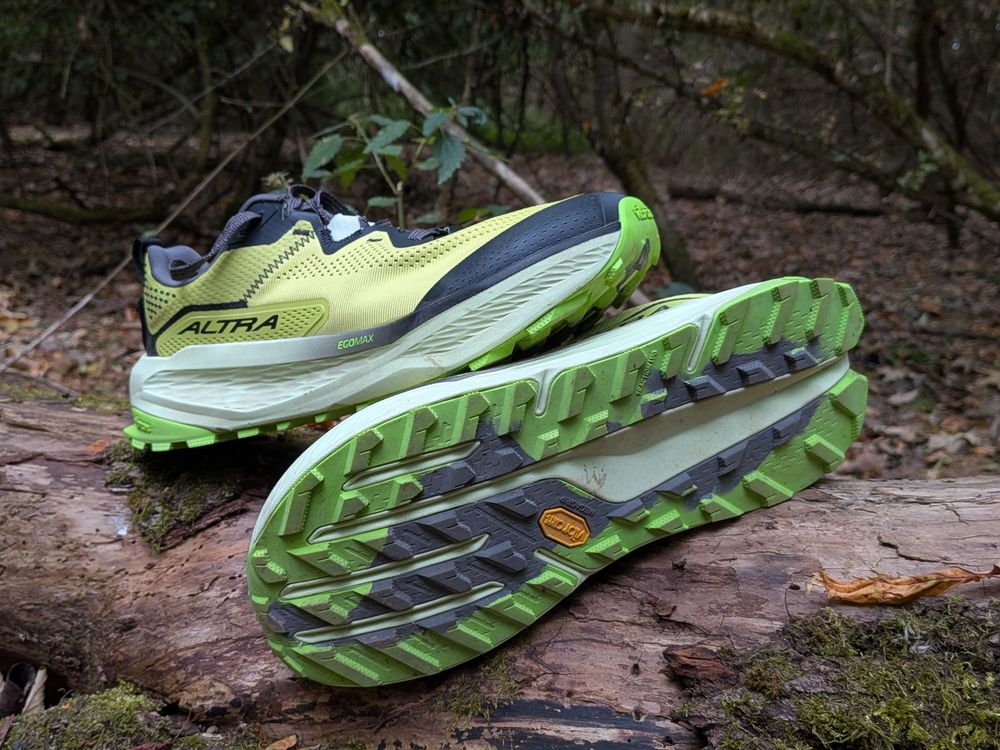
Taking the Olympus 7 out of the box, the first thing that strikes you is the size: a thick sole, a wide fit, a shoe that does not go unnoticed. The lugs and toe cap are generous, and just that gives confidence in grip and durability, not to mention that it’s a Vibram sole. The design remains quite functional, not exactly discreet either, but the colorway is pleasant to the eye despite the size.
Before lacing it up for real, I was mostly waiting for two things: good hold and lasting stability, to avoid foot or gait problems after several hours of running, and if possible good sensations during phases when you have to accelerate, in bursts or downhill. The brand sells the Olympus as a reference for protection and comfort over long distances, and the first tactile impressions went rather in that direction. The only real doubt before the first run: the apparent weight. It seemed heavy and imposing in the first steps. A bias that turned out to be an illusion afterward.
Lacing
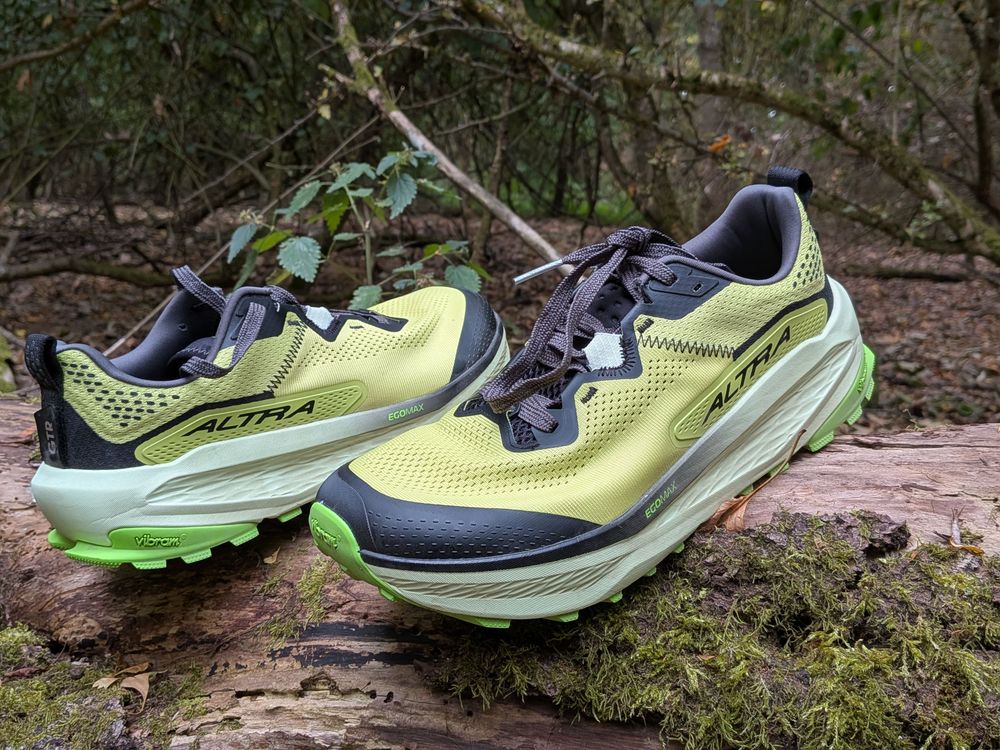
The shoe laces very well.
Getting started: a slipper that you forget about after a few strides
Right from putting it on, you feel the weight of the shoe, but the overall comfort of the foot inside the slipper is definitely there, no particular pressure points once laced. The lacing works well, it holds the foot without needing to be adjusted along the way. Whether stopped or walking, the foot support is already good, the shoe provides a lot of stability even before running a meter. It's more this impression of solidity that dominates at this stage, more than lightness.
Real condition test: 40 km on varied terrains
The test was done over three outings totaling about 5 hours of running, 40 km and 500 m of elevation gain, in dry and sunny weather (summer 2026, of course) from start to finish. No mud, no rain, so no way to judge the shoe's behavior in humidity. As for terrain, on the other hand, I varied it: dry rocks, forest trails, meadow, forest paths, with a few stretches of asphalt during transitions. Runs were at a jogging pace and one hill session, without any noticeable difference in behavior between the profiles. Over time, I didn't feel any degradation in the shoe's grip throughout the kilometers, it remains as dynamic at the end as at the beginning.
Performance
Very stable shoe with excellent protection, very good support, good grip and quite surprising given the first impression of heaviness, but it is responsive.
What about the performance of this Altra Olympus 7?
On technical sections, the protection quickly reassures: the foot is well shielded from shocks, and it’s also felt at the ankle level, very well supported even on tough terrain and steep slopes. It’s actually the overall stability that stands out as the biggest strength of the shoe: even on difficult footholds, I had neither pain nor fright, and the imposing build of the Olympus 7 clearly helps maintain stable support on steep slopes.
The grip goes in the same direction. On dry terrain, no grip issues, whether on rocks or more technical parts, and it’s probably the most convincing point of the test, even if I couldn’t verify its behavior on wet terrain due to lack of rain. Another good surprise: the propulsion. Despite a very wide forefoot and a feeling of heaviness on the first try, the foot roll is really smooth, and the shoe responds well whenever you need to accelerate, whether in rebounds or uphill.
The cushioning also does its job, both front and back, with a wide and effective rock plate, and no muscle pain after the outings, even the longest ones. It is difficult, however, to judge breathability and water drainage in these conditions: the shoe was very little wet given the dry weather, more humid outings will be needed to make a final call on this point. Finally, regarding fit, the toe-box keeps its promise of width: enough room for a wide foot, no rubbing observed during the entire test.
What to take away from this Altra Olympus 7 test?
After these 40 km, the Olympus 7 overall lives up to its promises. That’s kind of the surprise of the test: a shoe that, out of the box, looks like a heavy model designed for pure endurance and nothing else, and which actually proves to be surprisingly lively once you’re running, without losing any of what you expect from a model of this size, namely protection and stability on technical terrain.
After three runs, no sign of wear on the lugs or the upper, the materials look like they’re built to last, even if that remains to be confirmed over more kilometers. Two things remain to be checked over time: the grip performance on wet terrain, since I couldn’t test it in those conditions, and this good impression of durability beyond the first 40 kilometers. For now, the Olympus 7 checks the boxes for runners with wide feet who are looking above all for stability and protection on long distances. A little sizing advice if you’re interested: for me, no need to change my usual size. The shoe fits true to size.


